What Is the Coleman Model of Care Transitions (and How Does It Work for COPD)?
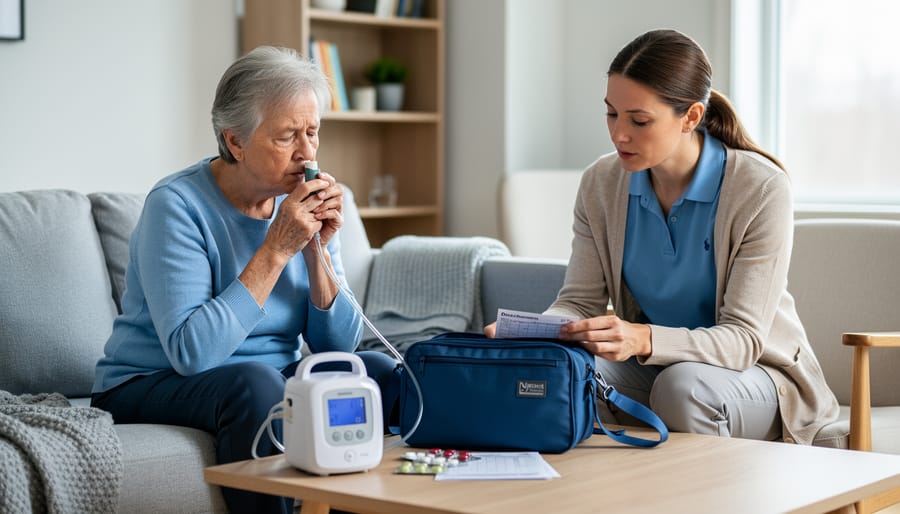
The Coleman Care Transitions Intervention is a structured, patient-centered program designed to reduce hospital readmissions and complications by bridging the gap between inpatient care and home recovery. Developed by Dr. Eric Coleman at the University of Colorado, this model assigns a dedicated “transitions coach” who works with you from hospital to home, ensuring medications are managed correctly, warning signs are understood, and follow-up appointments happen on schedule.
For people living with COPD in Canada, this matters profoundly. COPD accounts for one of the highest rates of hospital readmission in the country, often because the shift from hospital to home leaves patients navigating complex medication changes, oxygen equipment, and symptom monitoring without adequate support. A missed follow-up or confusion about inhaler technique can quickly spiral into another ER visit.
The Coleman model addresses this vulnerability through four core pillars: medication self-management, a patient-centered health record you control, timely follow-up with your healthcare team, and clear education about red-flag symptoms that demand immediate attention. Your transitions coach doesn’t replace your doctor or respirologist. Instead, they act as a guide and advocate during the critical weeks after discharge, when you’re most at risk.
This article explains how the Coleman model works in practice, breaks down each of the four pillars, and shows how COPD patients specifically benefit from this approach. You’ll also learn how to access transitions of care programs in Canada, what questions to ask your hospital discharge planner, and how to advocate for coordinated care that keeps you out of the hospital and in control of your health.
What the Coleman Care Transitions Model Means for COPD Patients
The Coleman Care Transitions Model is a patient-centered framework developed by Dr. Eric Coleman, a geriatrician and professor at the University of Colorado, to reduce hospital readmissions and complications during the critical period when patients leave the hospital and return home. For people with COPD, this model addresses a specific vulnerability: the transition from hospital to home is when many patients experience setbacks, confusion about medications, and unclear instructions about managing their breathing difficulties.
Unlike traditional discharge planning, which often involves handing patients a stack of papers and scheduling a follow-up appointment, the Coleman model centers on coaching rather than case management. A trained Transitions Coach works alongside you, not directing your care, but teaching you the skills to manage it yourself. This approach recognizes that you’re the expert on your own body and daily life, while the coach provides the tools and confidence to navigate your COPD care across different healthcare settings.
- Care transitions
- The movement of patients between healthcare locations, providers, or levels of care as their condition and needs change. For COPD patients, this most commonly refers to the shift from hospital back to home.
- Transition Coach
- A trained healthcare professional who works with patients during care transitions to build self-management skills and confidence, rather than managing care for them.
- Self-management
- The patient’s ability to actively participate in their own care by understanding medications, recognizing warning signs, and knowing when and how to seek help.
- Four Pillars
- The core components of the Coleman model: medication self-management, maintaining a personal health record, follow-up care planning, and knowing warning signs.
Research from the Coleman care transitions trial demonstrated that this coaching approach significantly reduced hospital readmissions within 30 days of discharge. The model empowers you to communicate clearly with your healthcare team, understand what each medication does for your lungs, and recognize early signs that your COPD might be worsening, skills that remain valuable long after the coaching period ends.
How the Coleman Model Works

The Transition Coach’s Role
The Transitions Coach acts as your guide and advocate during the critical weeks after leaving the hospital. Unlike traditional case managers who coordinate services or tell you what to do, coaches work alongside you to build your confidence and skills in managing your own COPD care.
Your coach will meet with you in the hospital before discharge and visit your home within two to three days of returning. During these sessions, they help you understand your medications, recognize warning signs specific to your COPD, and practice communicating your needs to doctors and specialists. They don’t make decisions for you. Instead, they ask questions that help you identify potential problems and develop your own solutions.
Coaches also bridge communication gaps between you and your healthcare team. If you’re confused about conflicting advice from your respirologist and family doctor, your coach helps you prepare questions to clarify those issues. They ensure you understand your discharge instructions and know exactly what to do if your breathing worsens or your symptoms change.
Perhaps most importantly, coaches provide emotional support during a stressful time. They validate your concerns, celebrate your progress, and help you feel capable rather than overwhelmed.
Timeline and Touchpoints
The Coleman model follows a structured 28-to-30-day timeline that targets the period when COPD patients are most vulnerable to complications and readmissions.
It starts while you’re still in the hospital. Your Transitions Coach visits you before discharge to introduce themselves, begin building your Personal Health Record, and start discussing your medications and follow-up care. This initial contact sets the foundation for what comes next.
Within 48 to 72 hours after you return home, the coach conducts a home visit. This timing isn’t arbitrary, the first few days home are when many COPD patients struggle most with medication routines, oxygen management, and recognizing warning signs. During this visit, the coach assesses how you’re managing, addresses any confusion about your discharge instructions, and helps you prepare for upcoming appointments.
Following the home visit, the coach contacts you by phone at key intervals over the next few weeks, typically around days 7, 14, 21, and 28. These calls aren’t checklist exercises. They’re opportunities to troubleshoot problems, reinforce what you’ve learned, and ensure you’re gaining confidence in managing your COPD independently.
This phased approach acknowledges a critical reality: most COPD readmissions happen within 30 days of discharge, often because patients face challenges they don’t know how to handle alone.
The Four Pillars of the Coleman Model
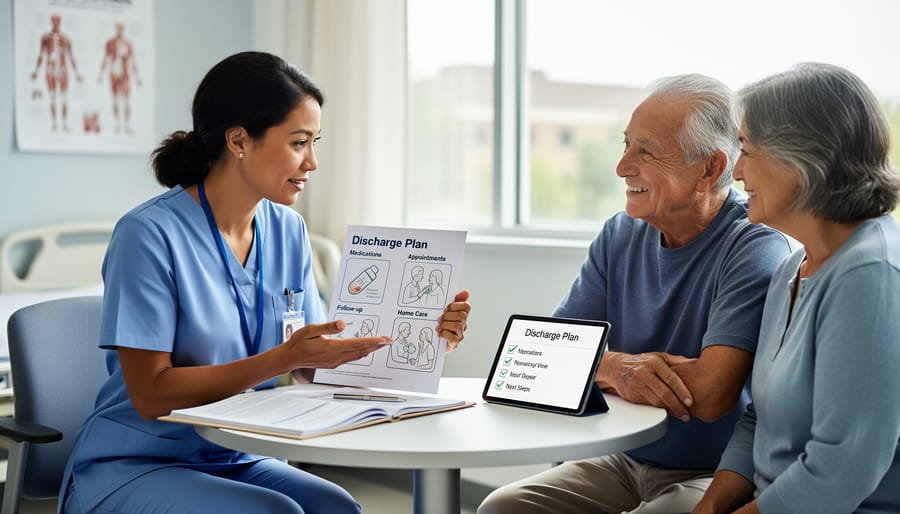
Pillar 1: Medication Self-Management
Medication errors and confusion rank among the most common, and dangerous, problems COPD patients face after leaving the hospital. The first pillar addresses this head-on by teaching you to take charge of your medications rather than passively following instructions.
Your Transitions Coach helps you create and maintain a current medication list that includes everything you take: prescriptions, over-the-counter drugs, inhalers, oxygen settings, and supplements. This isn’t just a record for providers. You learn what each medication does for your COPD, how to spot side effects, and when to raise concerns.
Coaches practice real conversations with you, how to ask your pharmacist about drug interactions, what to tell your doctor if you’re struggling with inhaler technique, and how to explain your regimen to emergency staff. You become fluent in your own treatment, which matters enormously when COPD requires multiple medications that change frequently. The goal is confident self-management: you know what you’re taking, why it matters, and how to speak up when something doesn’t seem right.
Pillar 2: Using a Patient-Centered Health Record
The Personal Health Record (PHR) is a simple, patient-owned document that puts essential medical information in your hands, literally. Unlike the thick chart your doctor maintains, your PHR fits on a single page or card and travels with you to every appointment, emergency visit, and pharmacy trip.
Your PHR lists four critical pieces of information: your diagnoses (COPD, heart disease, diabetes, whatever applies), all current medications with doses, allergies and adverse reactions, and key healthcare contacts including your family doctor, specialists, and pharmacy. Think of it as your medical passport.
When you arrive at a walk-in clinic short of breath, or visit a new specialist, this record prevents dangerous gaps. You won’t forget that antibiotic that caused a rash, or that you’re on three different inhalers. The transitions coach teaches you to keep this document current, updating it whenever medications change, carrying it in your wallet, and showing it to every provider you see.
This empowers you to speak up confidently. Instead of saying “I take the purple puffer,” you can state “I use Symbicort 200/6, two puffs twice daily.” That clarity prevents medication errors and ensures every provider works from the same accurate information about your COPD care.
Pillar 3: Follow-Up Care Planning
Follow-up care planning teaches COPD patients to take ownership of their post-discharge medical appointments rather than passively receiving instructions. Your Transitions Coach helps you understand which appointments are truly necessary, like seeing your respirologist within seven to ten days if you’ve had an exacerbation, and which can wait.
You’ll learn to prepare specific questions before each visit. Instead of nodding along, you’ll arrive with your medication list, a written account of your symptoms since discharge, and concerns you need addressed. Your coach guides you through creating a simple tracking system: noting when breathlessness worsens, how your energy levels fluctuate, or whether your rescue inhaler use has increased.
This pillar also covers distinguishing routine follow-up from urgent situations. You’ll develop a clear understanding of when to wait for your scheduled appointment versus calling your doctor immediately. For COPD patients, this means recognizing the difference between normal post-illness fatigue and warning signs that demand same-day attention. Your coach ensures you have direct contact numbers for your healthcare team and confidence to use them appropriately, preventing both unnecessary emergency visits and dangerous delays in seeking help.
Pillar 4: Knowing Warning Signs and What to Do
The fourth pillar teaches you to recognize when your COPD is worsening and exactly what to do about it. Your Transitions Coach will help you identify your personal “red flags”, warning signs that need immediate attention, like increased breathlessness that doesn’t ease with your rescue inhaler, sputum that turns yellow, green, or brown, swollen ankles, or unusual fatigue that keeps you from daily activities.
You’ll develop a simple action plan with clear steps: which symptoms mean calling your doctor within 24 hours, which require same-day contact, and which warrant going to the emergency department. This isn’t about making you anxious; it’s about giving you confidence to act early when problems are easier to manage.
The coach will work with you to distinguish between normal day-to-day fluctuations and genuine red flags. You’ll learn to trust your instincts, advocate for yourself when something feels wrong, and communicate changes clearly to your healthcare team. Many COPD patients wait too long to seek help because they’re unsure whether their symptoms are serious enough, this pillar removes that uncertainty.
How the Coleman Model Is Used in COPD Care
Hospitals and health systems around the world have recognized the Coleman model’s effectiveness for managing COPD transitions, a condition that consistently ranks among the highest for preventable readmissions. In Canada, several health authorities have adapted the framework within their discharge planning programs, particularly for patients with chronic respiratory disease. These implementations typically begin when a patient with COPD is admitted for an exacerbation, with a transitions coach or similarly trained professional connecting with them before discharge to establish the relationship and begin teaching the four pillars.
The model has been integrated into various healthcare settings:
- Hospital discharge planning teams specifically serving respiratory patients
- Pulmonary rehabilitation programs that extend support into the home environment
- Community health centers coordinating care for complex chronic disease patients
- Integrated care teams that bridge hospital, primary care, and home care services
Research consistently shows that COPD patients who receive structured care transitions support experience fewer emergency visits and readmissions within the critical first 30 days post-discharge. One Canadian pilot program reported a 28% reduction in COPD readmissions after implementing Coleman-based coaching. The model’s emphasis on medication reconciliation proves particularly valuable for COPD patients, who often manage multiple inhalers, oral medications, and oxygen therapy with specific timing requirements.
What makes the Coleman approach especially suited to COPD is its focus on self-management and early warning sign recognition. Coaches work with patients to identify their individual exacerbation patterns and develop personalized action plans, skills that extend far beyond a single hospital stay and fundamentally change how patients engage with their ongoing COPD care.
Benefits for COPD Patients and the Healthcare System
The Coleman model delivers measurable improvements for both COPD patients and the healthcare system, a rare instance where better patient experience aligns with system efficiency.
For patients, the most immediate benefit is reduced hospital readmissions. COPD accounts for one of the highest readmission rates in Canada, with many patients returning within 30 days of discharge. Studies of the Coleman model show readmission reductions of 30-50%, largely because patients learn to recognize and respond to early warning signs before they escalate into crises requiring emergency care.
Beyond keeping you out of the hospital, the model builds genuine confidence in managing your condition. Patients consistently report feeling more capable of handling their COPD after working with a transitions coach. This translates into better medication adherence, you understand what each inhaler does and why it matters, and improved ability to communicate with your healthcare team about symptoms and concerns.
Quality of life improves when you feel in control rather than at the mercy of your disease. The coaching relationship provides emotional support during a vulnerable period, reducing anxiety about managing complex care at home.
From a system perspective, fewer readmissions mean substantial cost savings. More importantly, this approach embodies people-centered care: it treats you as a capable partner in your health rather than a passive recipient of services. The model succeeds precisely because it invests in your ability to manage your condition effectively, creating lasting benefits that extend well beyond the 30-day intervention period.
Accessing Care Transitions Support in Canada
Finding care transitions support in Canada requires a bit of self-advocacy, but you have every right to ask about these services. Not all Canadian hospitals have formalized Coleman model programs, but many health authorities offer similar care transitions initiatives under different names, discharge planning teams, transitional care programs, or integrated care pathways for chronic disease management.
Start by asking your healthcare team directly while you’re still in hospital. The discharge planner, social worker, or your primary nurse can tell you what support exists. Don’t wait until the day you’re leaving, bring it up as soon as your discharge is being discussed. If your hospital doesn’t use the Coleman model specifically, ask what transitions support they do provide for COPD patients.
Here are specific questions to ask your healthcare team:
- Does this hospital have a care transitions program or transitions coach for COPD patients?
- Will I have any support or follow-up contact after I go home?
- Who should I call if I have questions or concerns once I’m at home?
- Can you help me understand my medications and warning signs before discharge?
- Will someone review my discharge plan with me and my family?
If formal transitions coaching isn’t available, you can still request comprehensive discharge planning, it’s your right as a patient. Ask for written information about your medications, clear instructions about follow-up appointments, and emergency contact numbers. Request that someone review warning signs specific to COPD exacerbations with you before you leave.
Provincial health authorities often have chronic disease management programs that include elements of care transitions support. Contact your local COPD clinic, respirology department, or provincial health information line to ask about available programs in your region. Some provinces have home care services that provide post-discharge follow-up calls or visits, even if they don’t label it as “care transitions coaching.”
Remember, advocating for yourself isn’t being difficult, it’s being responsible for your health. Healthcare providers want you to succeed at home, and asking these questions helps them understand what support you need.
Frequently Asked Questions
The Coleman model raises practical questions for COPD patients and families considering care transitions support. Here are answers to the most common concerns:
Is there a cost for Coleman model services?
In most Canadian settings, care transitions programs are covered through hospital or health authority budgets at no direct cost to patients. Some programs may be included in your provincial health coverage, while others depend on hospital resources or pilot funding.
How does this differ from regular home care?
Unlike home care, which provides hands-on services like nursing visits or personal support, the Coleman model focuses on coaching and teaching you self-management skills. Transitions coaches empower you to navigate the healthcare system and manage your COPD independently, rather than doing tasks for you.
Can my family members participate in the coaching sessions?
Yes, family involvement is encouraged and often essential, especially if they help manage your medications or recognize warning signs. Coaches typically include caregivers in hospital visits, home visits, and phone follow-ups to ensure everyone understands the care plan.
What if my hospital doesn’t offer a transitions coach?
You can still apply the four pillars on your own: maintain a medication list and health record, prepare questions for follow-up appointments, learn your COPD warning signs, and practice speaking up about concerns. Ask your discharge planner or family doctor for tools to support these skills.
How long does transitions coaching last?
Standard Coleman model programs run approximately 28 to 30 days after hospital discharge, covering the highest-risk period for COPD readmissions. The exact schedule varies, but typically includes one or two home visits and several phone check-ins during that month.
Even without formal coaching, understanding the Coleman framework helps you advocate for better transitions support. Ask your healthcare team specific questions: Who should I call if symptoms worsen? When is my follow-up appointment scheduled before I leave the hospital? Can someone review my medications and their purposes with me? These questions reflect the Coleman model’s emphasis on patient empowerment and can improve your transition regardless of whether a dedicated coach is available.
The Coleman Care Transitions Model marks a fundamental shift in how we approach COPD care after hospitalization. Instead of treating you as a passive recipient of instructions, this framework recognizes you as an active partner in your own health journey. The model’s focus on coaching, self-management skills, and empowerment aligns with what modern healthcare should be: centered on people, not just procedures.
If you’re facing a hospital discharge or supporting someone who is, ask about care transitions programs. Don’t hesitate to request a Transitions Coach, inquire about discharge planning resources, or advocate for the support you need during this vulnerable period. Even if a formal program isn’t available, you can apply the model’s principles yourself by maintaining your medication list, understanding warning signs, and preparing for follow-up appointments.
Your healthcare team should be your partners, not just your providers. Take an active role in your care decisions, ask questions, and build the confidence to manage your COPD effectively across all care settings. Empowered patients achieve better outcomes.